
Playrooms Map Dreamcore: Layout and Aesthetic
How the Playrooms map is structured, why the game looks like a dreamcore liminal space, and how to navigate the eight areas without an in-game minimap.
Quick answer: Playrooms does not have an in-game minimap. Its "map" is a chain of themed ball-pit areas joined by a corridor of doors, with each area unlocked by a key bought with delivered balls. The dreamcore look comes from empty play spaces, flat fluorescent lighting, repeating door frames and the deliberate absence of other people.
What dreamcore means here
Dreamcore is an internet aesthetic built from places that feel familiar and slightly wrong: empty pools, hotel corridors, waiting rooms, play areas after closing time. The pictures are usually brightly lit, low on detail and missing the people who should be there. It overlaps with liminal-space photography and the backrooms genre, but it is not a genre label that Two Pixels uses on the Steam page.
That distinction matters when you read guides. The game is officially a casual simulation with horror elements. "Dreamcore" is a useful way to describe the art direction, not a promise that every room follows a dream logic. Some rooms are simply mazes with a joke attached.
How the Playrooms map is put together
The structure is simpler than the aesthetic suggests. There is a starting Playroom, then a series of themed areas, then a final pit. Each area is entered through a door, and each door is opened with a key bought from the shop using delivered balls. The corridor of doors between areas is the closest thing the game has to a hub.
There is no map screen and no objective marker. The pit in each area is the fixed point. Everything else — side rooms, lockers, chairs, pool edges — is arranged around that pit. Once you understand that, navigation becomes a loop rather than a route: find the pit, clear outward, return, deliver, repeat.
The areas are not laid out on a single open map. You do not walk from the Hotel into the School across a car park. You finish an area, buy the next key and go through the next door. That is why "map" guides for this game are really area-order guides.
The eight areas and their visual logic
| Area | Visual language | Navigation problem |
|---|---|---|
| Playroom | Pink pit, wide floor, soft light | Almost none; it is the tutorial |
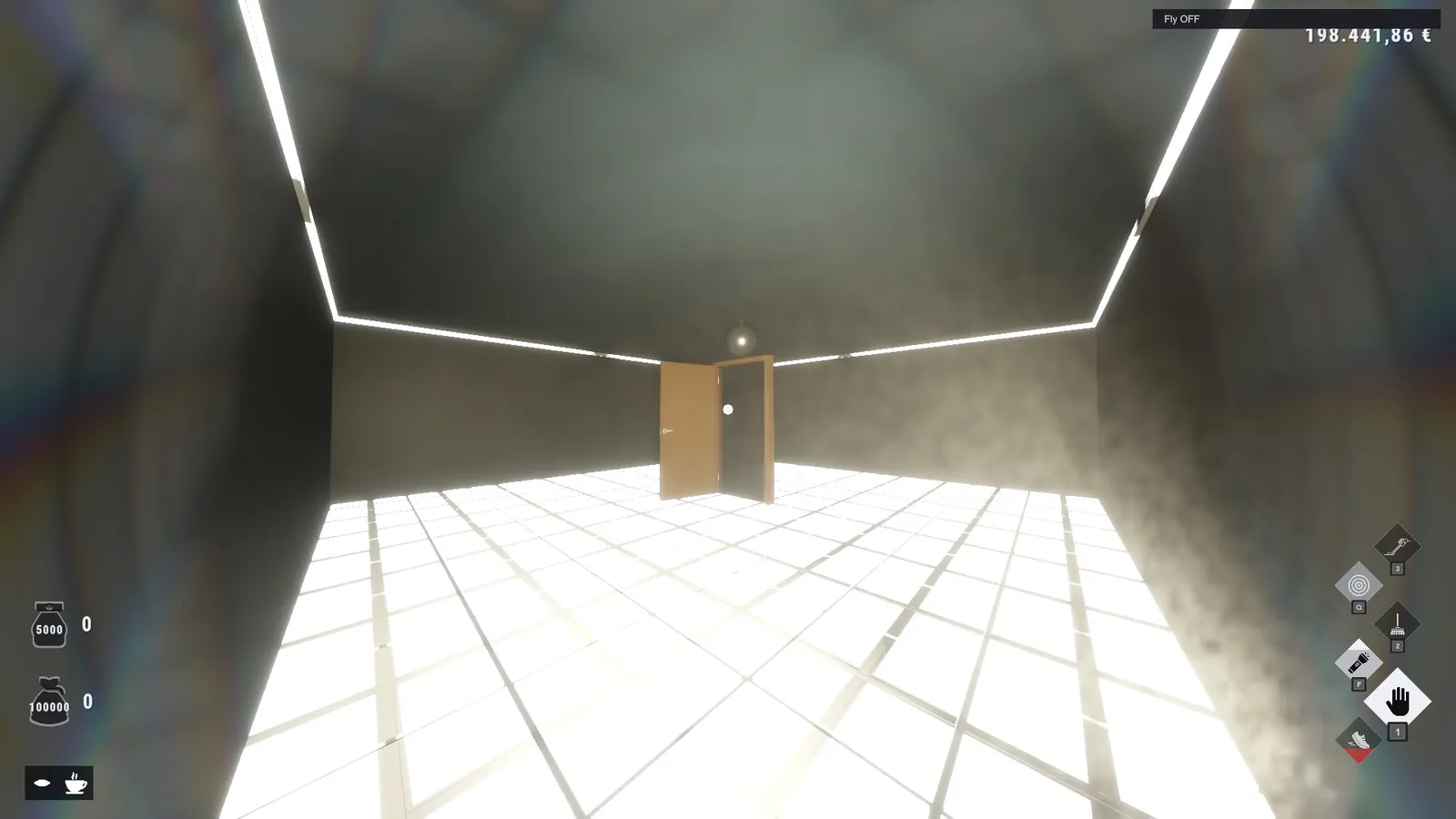
| Poolroom | White tile, water, split levels | Balls collect at the waterline and under the lip |
| Backrooms | Yellow wallpaper, repeated door frames | The maze repeats on purpose |
| Waiting Room | Reception desk, chairs, low light | Balls hide under furniture and near the ceiling |
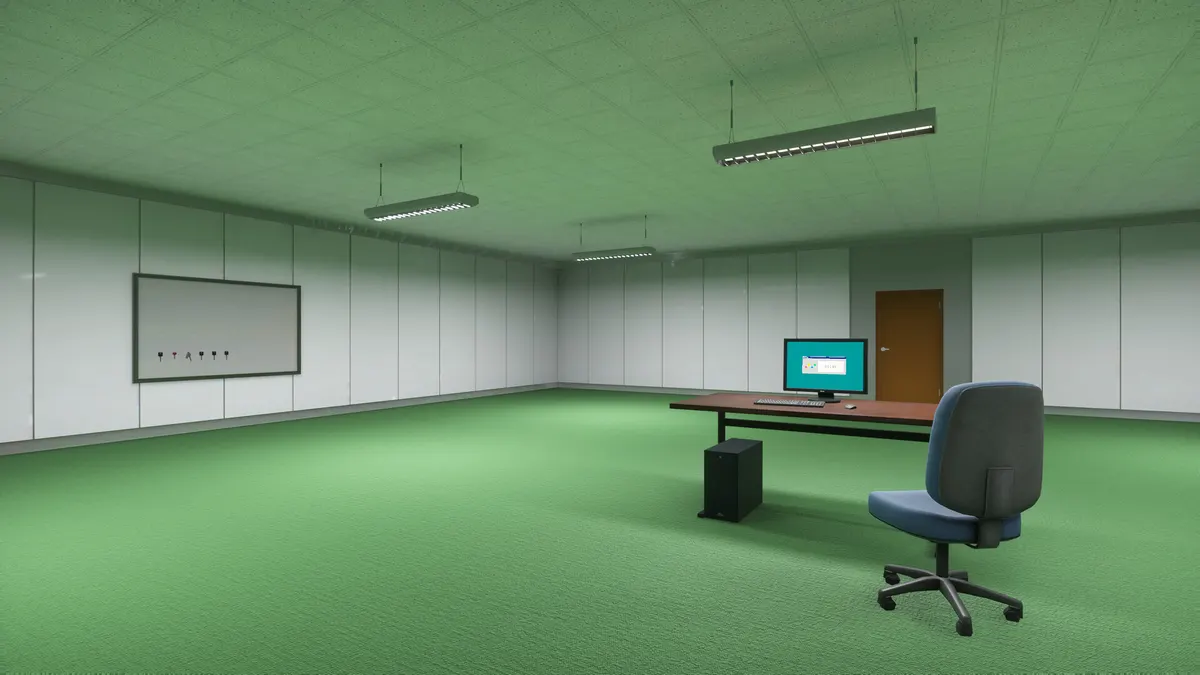
| Office | Green carpet, cubicles, a phone | A follower changes your route |
| Hotel | Red corridors, room numbers, shifting layout | Corridors narrow if you stay too long |
| School | Classrooms, gym, red lockers | Locker bursts punish full hands |
| Final pit | Single pit, exit | Do not leave before delivering |
The visual logic is consistent: each area takes one ordinary place and removes the people. The Poolroom is a pool with no swimmers. The Office is a workplace with no staff. The Hotel is a hotel with no guests. The School is a school with no children. The ball pit is the only thing that still looks like it is waiting to be used.
Why the Backrooms and Hotel feel different
The Backrooms is the most explicitly liminal area. Yellow wallpaper, flat light and more doors than the floor plan needs. The room is trading on the backrooms meme directly, and the joke is that opening doors is not progress. The pit is progress. If you want the route rather than the reading, the Backrooms guide→ covers the corridor loop.
The Hotel is the most dreamlike area because the layout changes. Corridors lead to different rooms, and the room-number plates are the only stable reference. That is closer to an actual dream than the static mazes: the place is recognizable, but the route you just walked does not stay put.
The Office is the odd one out. It is a maze, but its horror beat is a follower rather than architecture. Answering the phone brings a worker to your position, which turns a route-planning problem into a pursuit problem. Ignoring the phone keeps the room quieter, but it does not remove the worker forever.
How to navigate without a map
- Find the pit first. Every area has one, and it is usually the brightest or most open space.
- Clear in loops, not lines. Start at the pit, walk one direction until the route turns or dead-ends, then come back.
- Deliver before exploring. A full load makes you slow and makes every side room a risk.
- Use sound. The pit has a distinct audio cue, and the handheld vacuum gives you feedback when it is picking something up.
- Mark doors by what is behind them. "Storage", "locked", "empty" is more useful than a mental picture of the whole floor.
The maze repeats corridors and door frames on purpose. A full-floor mental map is wasted effort. Use the pit as the anchor and treat each corridor as a loop.
Does the aesthetic affect gameplay?
Mostly no. The dreamcore look is atmosphere, not a mechanic. The lights-out sections are the exception: when the lights fail, the flat lighting that makes the game recognizable is replaced by darkness, and you have to navigate by audio and the flashlight. That is the one point where the visual style becomes a gameplay problem.
Performance is worth a mention here because the flat, bright look is cheap to render but the blackout sections are not. If the lights-out areas stutter, lower the Lightmap Resolution setting to Quarter. That setting was added in the October 15 patch specifically for the frame drops in those sections.
What the style is not
It is not a walking simulator. You are still collecting and delivering balls, buying keys and upgrades, and clearing pits. It is not a horror game in the jump-scare sense either. The horror is the absence of people, the repetition and the occasional figure in a doorway, not a monster chase.
It is also not an officially branded "dreamcore game". If you are looking for a game that uses that word in its marketing, this is not it. The label fits the screenshots, and that is as far as the evidence goes.
Sources and official links
Official source: Playrooms on Steam ↗
FAQ
Is there a map in Playrooms? No. The game has no minimap or map screen. The areas are connected by doors, and the pit in each area is the fixed navigation point.
What is the order of the Playrooms map? Playroom, Poolroom, Backrooms, Waiting Room, Office, Hotel, School and the final pit. The order follows the achievement list, and the game has not published a separate official chapter menu.
Why does Playrooms look like a dreamcore game? Empty public spaces, flat fluorescent light, repeating doors and the absence of people are the same ingredients used in dreamcore and liminal-space photography. Two Pixels has not adopted the term officially.
Can you get lost permanently? No. You can always find the pit by sound and light, and the door back to the previous area stays open. The Backrooms is confusing, not a dead end.
Does the map change? Only in the Hotel, where the layout shifts during the run. The other areas keep their layout, including the Backrooms, which repeats rooms rather than rearranging them.